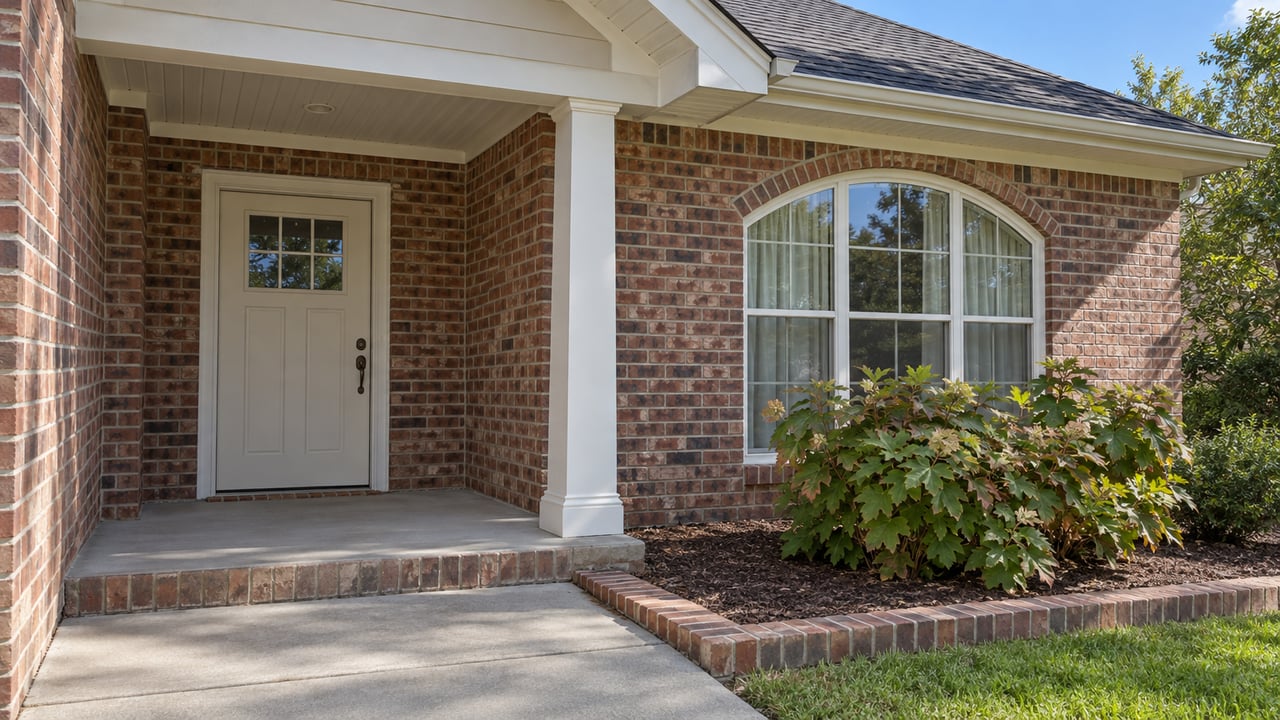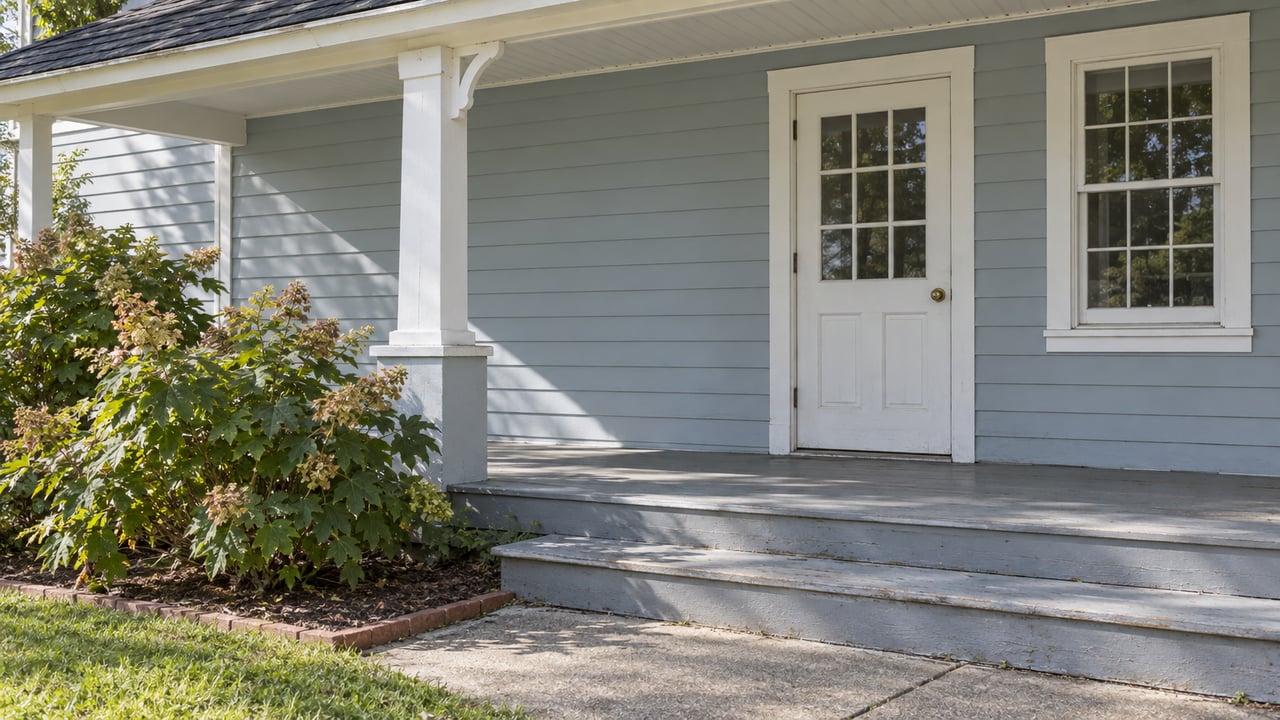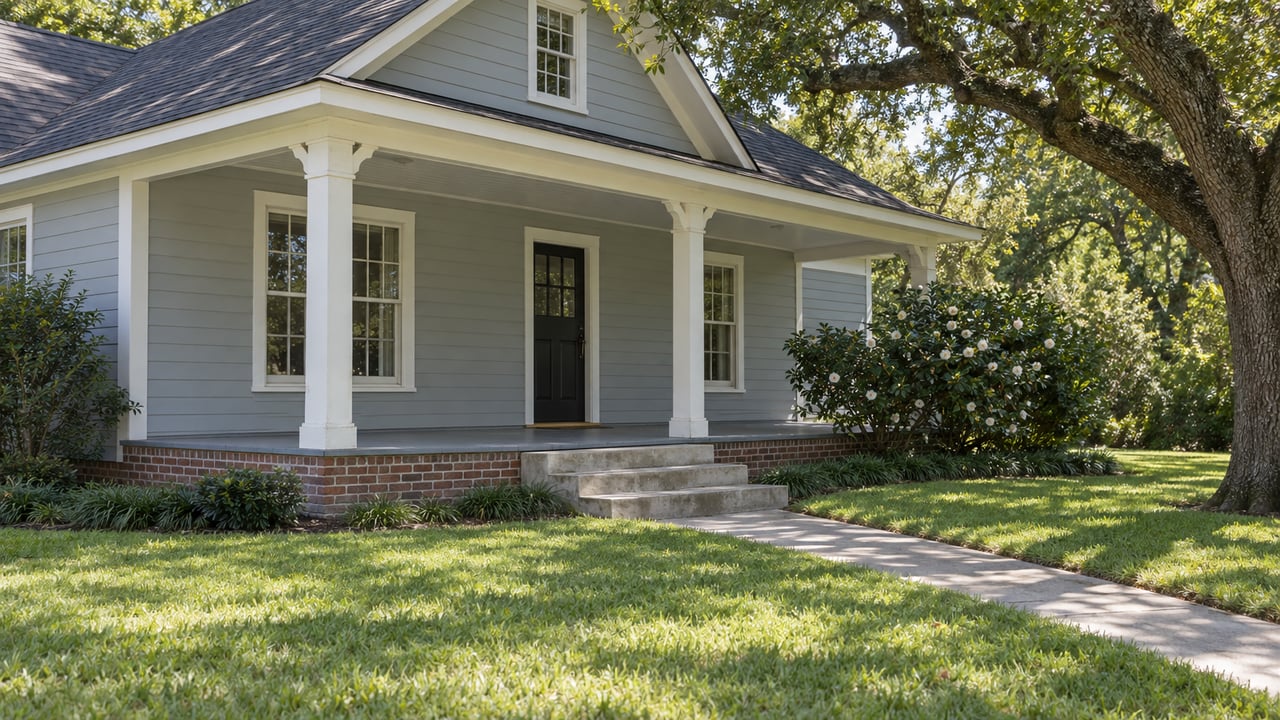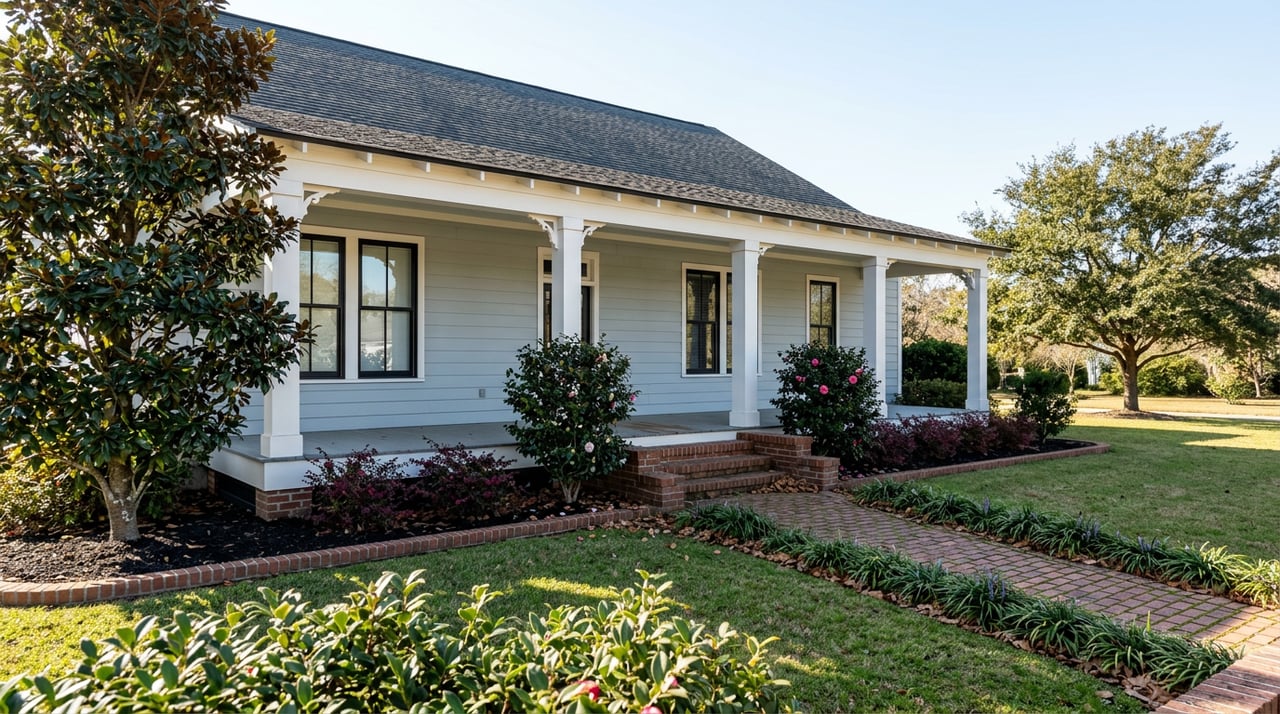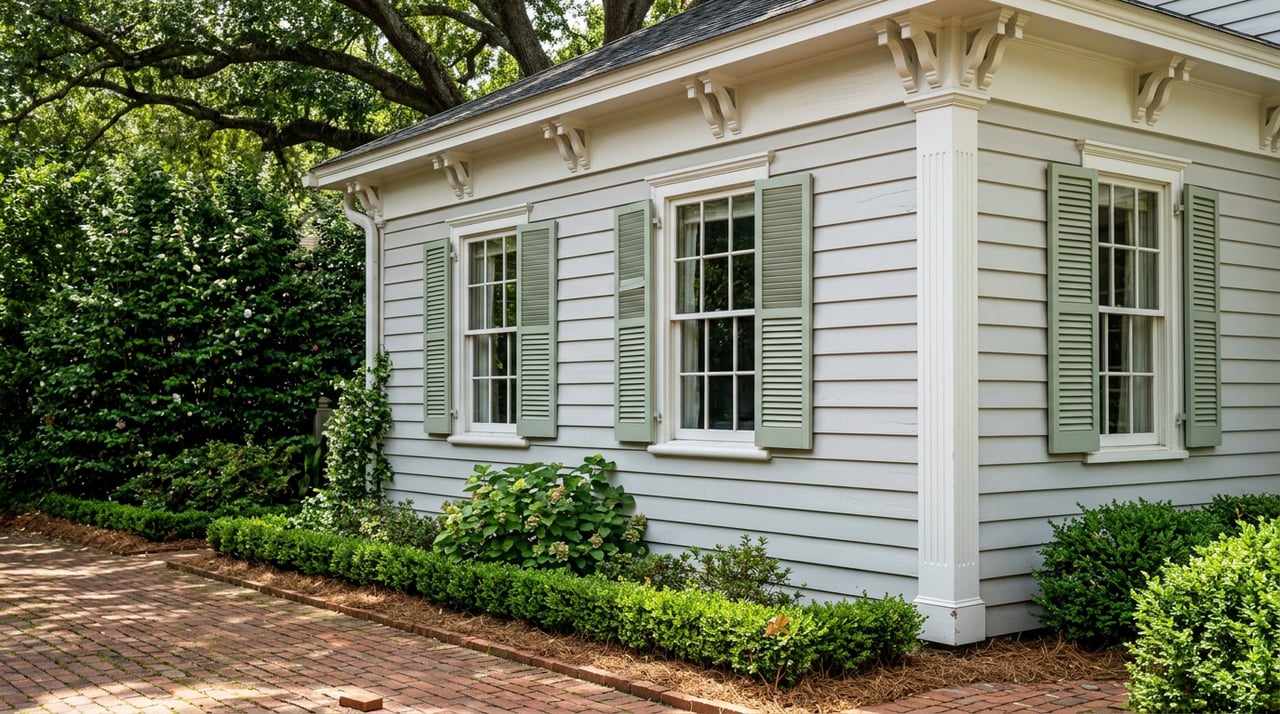
Picture a seller who spends a Saturday freshening the porch of an 1890s cottage on North Randolph. New paint on the brick foundation, fresh white on a set of previously unpainted cypress brackets, a tidy replacement of a rotted picket. Come Monday, the listing agent calls to say the buyer's inspector flagged the work, and the city has questions. The house is one of the roughly 738 contributing structures inside the Seth Lore and Irwinton Historic District, and none of that weekend labor had a Certificate of Appropriateness on file.
That is the story most Eufaula sellers do not hear until it costs them a closing date. It is also the reason a downtown historic listing is really a permitting story wearing a marketing story's clothes.
The 738 Houses That Come With a Rulebook
The district was listed on the National Register in 1973 and expanded in 1986 to include 738 contributing buildings across 942 total properties, making it the largest historic district in east Alabama and the second largest in the state. Inside those boundaries sit Shorter Mansion, Fendall Hall, the Hart House, the 1895 Foy-Beasley House designed by mail-order architect George Franklin Barber, the Eufaula Carnegie Library, and the state's oldest High Gothic First Presbyterian Church. The Central Business District east of Eufaula Avenue holds one of Alabama's most coherent collections of intact mid-to-late 19th-century small-town commercial buildings.
National Register listing by itself is honorary. What changes the transaction math is Eufaula's own local designation, which activates Alabama Code § 11-68-9. That statute reads plainly: no exterior change, erection, demolition, or sign work happens inside a locally designated historic district without a Certificate of Appropriateness issued by the local commission. Painting an originally unpainted surface counts. Failing to maintain a structure counts as "demolition by neglect."
The commission that issues those certificates is the Eufaula Historic Preservation Commission. Seven members, three-year staggered terms, meeting on the second Tuesday of the month at 4:00 p.m. in the police department court room at 545 East Barbour Street, as needed. That calendar is the piece most sellers underestimate.
What Actually Triggers a Certificate
The category of "exterior change" is broader than most owners assume. A useful working list for a seller preparing to list:
- Roof material or color change, including asphalt-to-metal swaps
- Window replacement, sash changes, or muntin pattern alterations
- Siding repair that changes material or profile
- Paint on any surface that was originally unpainted, including brick, stone, and certain wood elements
- Porch reconstruction, column replacement, or bracket restoration
- Fence, gate, and railing changes at the street-facing elevation
- Signs of any size on commercial bays inside the Central Business District
- Additions, outbuildings, and detached garages
- Demolition of any kind, including partial demolition of a rear ell or a failing chimney
- Ongoing failure to maintain, treated by statute as a change requiring review
The commission may adopt an expedited path for routine maintenance, which covers like-for-like repair with matching materials. Anything that reads on the elevation as different from what was there before is not routine.
The Second-Tuesday Problem
The commission meets monthly, "as needed." A seller who wants to repaint the front elevation before spring photography, or replace a rusted-through standing-seam section on a rear roof, is not choosing when the file gets reviewed. That means real time on the pre-listing calendar. Here is the working sequence I hand sellers when we sit down at the kitchen table:
| Week | Action | Why it matters |
|---|---|---|
| 10 to 8 weeks pre-listing | Walk the elevations with a preservation-literate contractor, list every item that reads different from existing | Catches paint, sign, and window items owners forget are regulated |
| 8 to 6 weeks | File COA application with drawings, photographs, and material specs | Application must be complete before the meeting packet closes |
| 6 to 4 weeks | Second-Tuesday hearing; commission issues, denies, or asks for revisions | A denial is not the end; a Certificate of Economic Hardship path exists, but it adds 45 days |
| 4 to 2 weeks | Building permit issued against the approved COA, work performed | Standard Alabama building code applies alongside the preservation approval |
| 2 weeks to launch | Photography, staging, disclosure packet assembly | Buyers' agents now have documented compliance to reference |
The 45-day statutory decision window on a Certificate of Economic Hardship is written into § 11-68-9 and is not negotiable. If the commission fails to hold a hearing or render a decision in that window, the application is deemed granted, but planning a listing around a deemed grant is not a strategy.
What Buyers' Agents Are Reading in Your Disclosure Packet
Here is the friction that catches sellers off guard at the inspection table. A buyer's agent representing a lifestyle purchaser from Atlanta or Birmingham is going to ask two questions about any Seth Lore contributing structure: whether the current owner has open or unpermitted exterior work, and whether the file at the commission shows a clean history. Both questions are answerable at the counter at City Hall.
If the answer to either is unclear, the buyer's contingency period stretches. Financing timelines compress. Repair credits get renegotiated. On a downtown Italianate priced above the local median, that friction is the difference between a summer close and an October one.
A seller who assembles a short file, listing prior COAs by date, matching them to visible improvements, and disclosing any items completed without approval, gives the buyer's side something concrete to underwrite. That is a small piece of paper that behaves like a price.
Reading May's Numbers Through a District Lens
Statewide, May 2026 sold volume reached $2.19 billion, up 28.8% year over year and 19.0% month over month, according to the Alabama Association of Realtors. Active listings ended May at 21,241, up 7.8% from the prior year. Redfin's cut of the same period shows an Alabama median of $307,408, up 4.2% year over year, with 62 median days on market and 16.7% of homes selling above list.
For a Seth Lore seller, none of those numbers are the number that matters. The relevant question is whether a period-appropriate rehab on an Italianate on North Eufaula Avenue prices against generic Alabama comps or against the small, thin comp set of contributing structures traded in the last twenty-four months. The 62-day statewide median almost always understates the actual selling window for a district property because the pool of qualified buyers is smaller and more selective. It also understates the price recovery a well-documented COA history supports.
Two structural factors compress the comp problem. First, the district's architectural mix runs from Bungalow and Craftsman through Late Victorian, Classical Revival, Gothic Revival, and the state's most extensive collection of domestic Italianate. Cross-style comping is standard practice here in a way it is not in newer subdivisions. Second, for larger commercial bays inside the Central Business District, the federal Historic Tax Credit equal to 20% of qualified rehabilitation expenditures becomes a real underwriting lever for investor buyers. That is worth foregrounding in the listing narrative, not burying in an addendum.
Two Listing Windows the District Hands You
The Eufaula Pilgrimage runs the first weekend of April, hosted by the Eufaula Heritage Association, and is billed as Alabama's oldest tour of homes. It pulls in-market buyers from Atlanta, Columbus, Montgomery, and Birmingham who are already thinking about a second home in a historic town. Listings that go live between mid-February and the last week of March intercept that traffic at the peak of their showing-request cycle.
The December Mistletoe Market and Christmas home tour, coordinated by Main Street Eufaula, pulls a quieter but higher-intent audience: buyers who have already toured in spring and are back to close. A listing that resets on the Monday after Thanksgiving with fresh photography reaches that group.
EufaulaFest in early October, staged along the Randolph Avenue canopy road, is less useful as a launch window and more useful as an open-house day. The foot traffic is already on the street.
FAQ
Does National Register listing alone restrict what I can do to my house? No. The National Register recognizes historic character and, on its own, places no restrictions on private owners absent federal funding or a local ordinance. Eufaula's local historic preservation ordinance is what activates the Certificate of Appropriateness requirement.
What happens if I did unpermitted exterior work five years ago and now want to sell? Disclose it, document it with photos and receipts, and consult the commission about a retroactive review. The statute treats ongoing failure to maintain as itself a change requiring a certificate, so the exposure runs both directions. A clean file assembled now is better than a buyer's agent finding a gap during due diligence.
Is a Certificate of Economic Hardship a realistic path if the commission denies my application? It exists in the statute and requires substantiated evidence of substantial economic hardship, evaluated at a public hearing with a 45-day decision window. It is a legitimate path for genuine cases and a slow one. Plan around approval, not around hardship relief.
Do the same rules apply to a new build on an empty lot inside the district? Yes. New construction inside a locally designated district requires a COA evaluated against local design guidelines for massing, materials, and fenestration. AHC certification is not required for new construction, but the local review is.
If you own a contributing structure inside Seth Lore and Irwinton and are thinking about a spring or fall listing, the calendar starts working against you sooner than you think. Chattahoochee Realty Group sits three blocks from the commission's meeting room, and we walk this file for a living. Get exclusive access to top listings, and a pre-listing walk-through built around the second Tuesday, by reaching out through our downtown office.