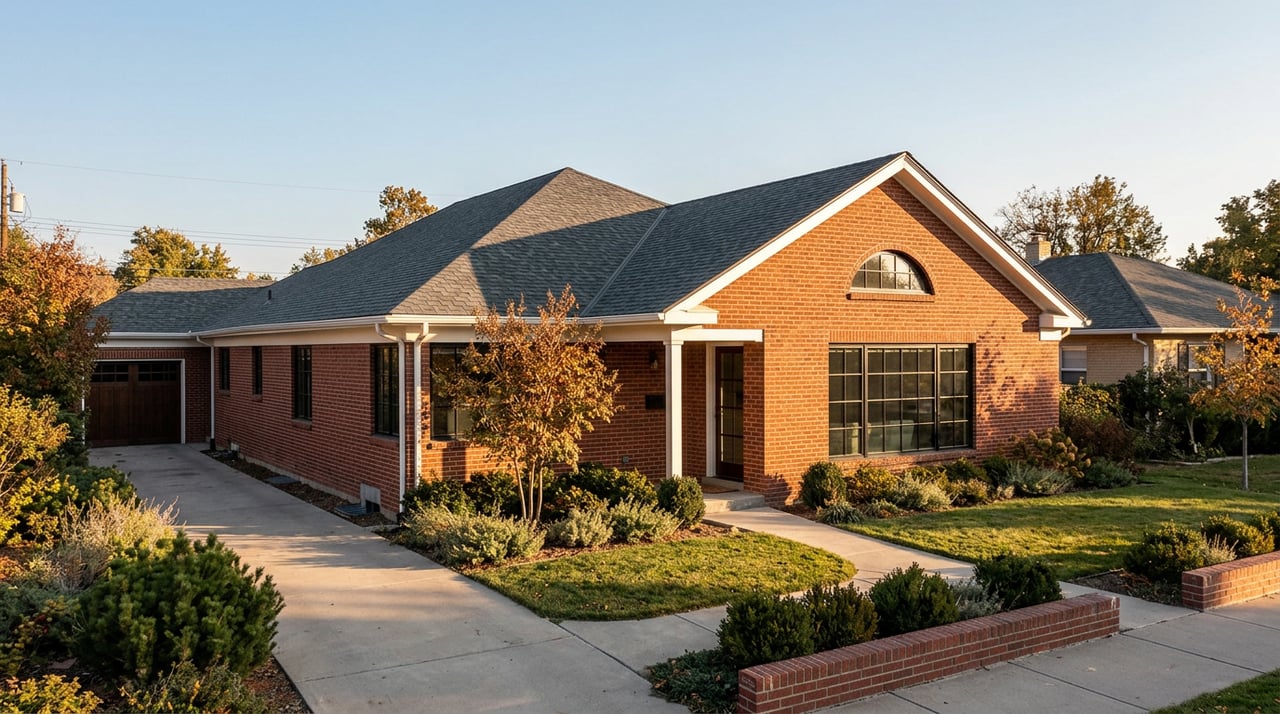
Take two recent Barbour County land transactions. One is 9.5 acres on Archie Drive, inside Eufaula's city limits, priced at $99,000. That works out to a little over $10,400 an acre. The other is the Highlands Tract, 57 acres of hunting ground north of Louisville, which sold for $171,000, about $3,000 an acre.
Same county. Same rough window of time. A three-and-a-half-fold gap in what an acre supposedly costs.
If you've been shopping land near Lake Eufaula or the Chattahoochee corridor and pulling up "average price per acre" numbers to sanity-check a listing, you've probably run into this same whiplash. Every source seems to disagree, and the disagreement isn't a rounding error. It's the whole story.
Same County, Five Different Answers
Pull up five different land data sources for Barbour County right now and you'll get five different average price-per-acre figures. LandSearch puts the average cost to buy at $12,820 an acre. Land Broker MLS lists it closer to $4,315 an acre. Acres.com, which tracks actual closed sales rather than asking prices, reports a median of $3,144 an acre across twenty recorded transactions. Land.com's own listing pages state that a typical single listing runs about 212 acres priced near $1,181,410, which pencils out to roughly $5,573 an acre.
| Source | What it's actually measuring | Price per acre |
|---|---|---|
| Acres.com | Median of 20 recorded closed sales | $3,144 |
| Land Broker MLS | Average across active listings | $4,315 |
| Land.com | Typical single active listing (212 ac / $1.18M) | ~$5,573 |
| LandSearch | Average across active listings | $12,820 |
Four sources, four numbers, and none of them are wrong. They're measuring different things. Some are averaging asking prices, which run higher because sellers anchor high and buyers negotiate down. Only Acres.com is looking at what actually closed. That gap between listed and sold, roughly $9,700 an acre between LandSearch's asking average and Acres.com's sold median, tells you more about how Barbour County land actually trades than any single number does.
One Website, Two Numbers
Here's where it gets more interesting. Land.com itself publishes a second statistic on the same county page: a county-wide aggregate showing around 100,000 acres listed for a combined value near $92 million. Divide that out and you get roughly $920 an acre, nearly six times lower than the $5,573 figure the same site quotes for its "typical listing."
That's not two different websites disagreeing. That's one website disagreeing with itself, because a handful of enormous tracts, the kind measured in thousands of acres, pull the aggregate average down hard while barely moving the "typical listing" average, which is closer to a median-sized parcel. A 3,077-acre property with a lodge, three lakes, and a long-term hunting lease sold in Barbour County on December 24, 2025 for $2,950,000. That's about $959 an acre, a number that looks nothing like what a buyer would pay for a residential-adjacent tract, and everything like what bulk recreational acreage actually trades for once you're past a couple hundred acres.
The Two Markets Hiding Inside the Average
What's really going on is that "land near Eufaula" isn't one market. It's at least two, and they price on entirely different logic.
The first market is small acreage near the city limits or a paved highway with utilities close by. Buyers here are pricing a homesite, not a production asset, and they'll pay a premium for the option to build. The Archie Drive parcel at $10,400 an acre fits this pattern exactly: 9.5 acres, inside city limits, three minutes to stores, natural pine and hardwood already on it. A 30-acre tract on AL-131 near Eufaula that includes a four-bedroom house listed at $396,000, about $13,200 an acre, sits in the same category, though there the improved value of the house itself is doing real work in that number and shouldn't be mistaken for raw land pricing.
The second market is bulk acreage, generally 100 acres and up, priced as a production or recreational asset: timber, hunting leases, row crop potential. Here the per-acre price falls as size climbs, because you're not buying a homesite, you're buying board feet and carrying capacity. A 373-acre tract on County Road 8 near Clio, planted in seven-to-eight-year-old pine with hardwood left standing in the streamside management zones, listed at $783,300, about $2,100 an acre. The 3,077-acre lodge property mentioned above closed at under $1,000 an acre. The Highlands Tract at $3,000 an acre sits comfortably in this same bulk-acreage lane.
Neither market is "the" Barbour County land market. They're two separate ones, and the countywide average you see quoted online is a blend of both, weighted by whichever parcels happened to be active or sold when the site pulled its data. That's why the number moves so much depending on the source and the month.
What's Actually Growing on It Changes the Number Too
Inside the bulk-acreage market, the type of timber standing on a tract has mattered quite a bit over the past year. The fourth-quarter 2025 stumpage report, published that January, showed Alabama pine sawtimber averaging in the $17 to $21 per ton range, down roughly 19 percent from a year earlier as softer housing starts pulled demand down. Hardwood sawtimber told a different story, holding near the top of the range across the whole South at about $33.55 a ton. Pine pulpwood in south Alabama specifically was one of the few stable fiber markets in the region, propped up by new mill and pellet plant investment from companies including Packaging Corporation of America and Georgia-Pacific's Brewton operations.
That split shows up directly in local listings. A 53-acre tract on River Road carries an active timber lease running through December 2034 that currently pays about $50 an acre annually, a small but real income stream layered on top of the land value, and one that only makes sense to price in if you know the lease terms rather than just the acreage. A 911-acre tract between Clio and Louisville pairs 675 acres of merchantable pine and hardwood timber with 95 acres of established pecan orchard and 22 acres of blueberries, diversifying the return well beyond what a pine plantation on its own would produce. Two tracts of similar size, planted the same decade, can carry meaningfully different value today depending on whether the timber mix leans toward the soft pine sawtimber market or the strong hardwood one.
So Which Number Should You Use?
None of them, on their own. Before comparing a specific tract to any published "average price per acre," it's worth working out three things first.
First, figure out which market the tract actually belongs to. A small parcel with road frontage, utilities, and proximity to Eufaula's city limits prices like a homesite candidate. A tract of 100 acres or more, away from town, prices like a production or recreational asset. Comparing one to the other's per-acre figure tells you nothing.
Second, ask what's standing on the land, not just how many acres there are. Mature hardwood, a producing pecan orchard, or an active timber lease with specific per-acre terms all change the math independently of the raw acreage total.
Third, treat "sold" data differently from "listed" data. The Acres.com median of $3,144 an acre reflects what buyers actually paid. Every other figure in this piece reflects what sellers were asking. That gap is real and it's the first thing worth asking a local land broker about before making an offer.
A Few Questions We Hear
Why did a 3,077-acre property sell for under $1,000 an acre when a 9.5-acre in-town lot sells for over $10,000? Because they're not competing for the same buyer. The small lot is priced against homesite demand near town. The large tract is priced against its production value as timber, hunting ground, or recreational acreage, and per-acre price naturally compresses as total acreage climbs.
Does an existing timber lease change what a buyer should pay? It should factor into the offer, since a lease locks in an income stream and terms for a set number of years, as with the River Road tract's lease running through 2034 at roughly $50 an acre. That's worth weighing against the flexibility of an unencumbered tract.
Is pine timber or hardwood timber worth more right now? In the fourth-quarter 2025 report, hardwood sawtimber was trading near record highs statewide while pine sawtimber had softened due to weaker housing starts. Pine pulpwood specifically held up better in south Alabama than in most of the region, thanks to newer mill investment nearby.
If you're weighing a specific tract against a countywide average you found online, that comparison is usually the wrong one to make. Chattahoochee Realty Group works land, timber, and lakefront transactions across the Chattahoochee corridor every week and can walk you through what a particular parcel's timber mix, lease terms, and location actually mean for its value. Reach out to get exclusive access to top listings before they're widely marketed.